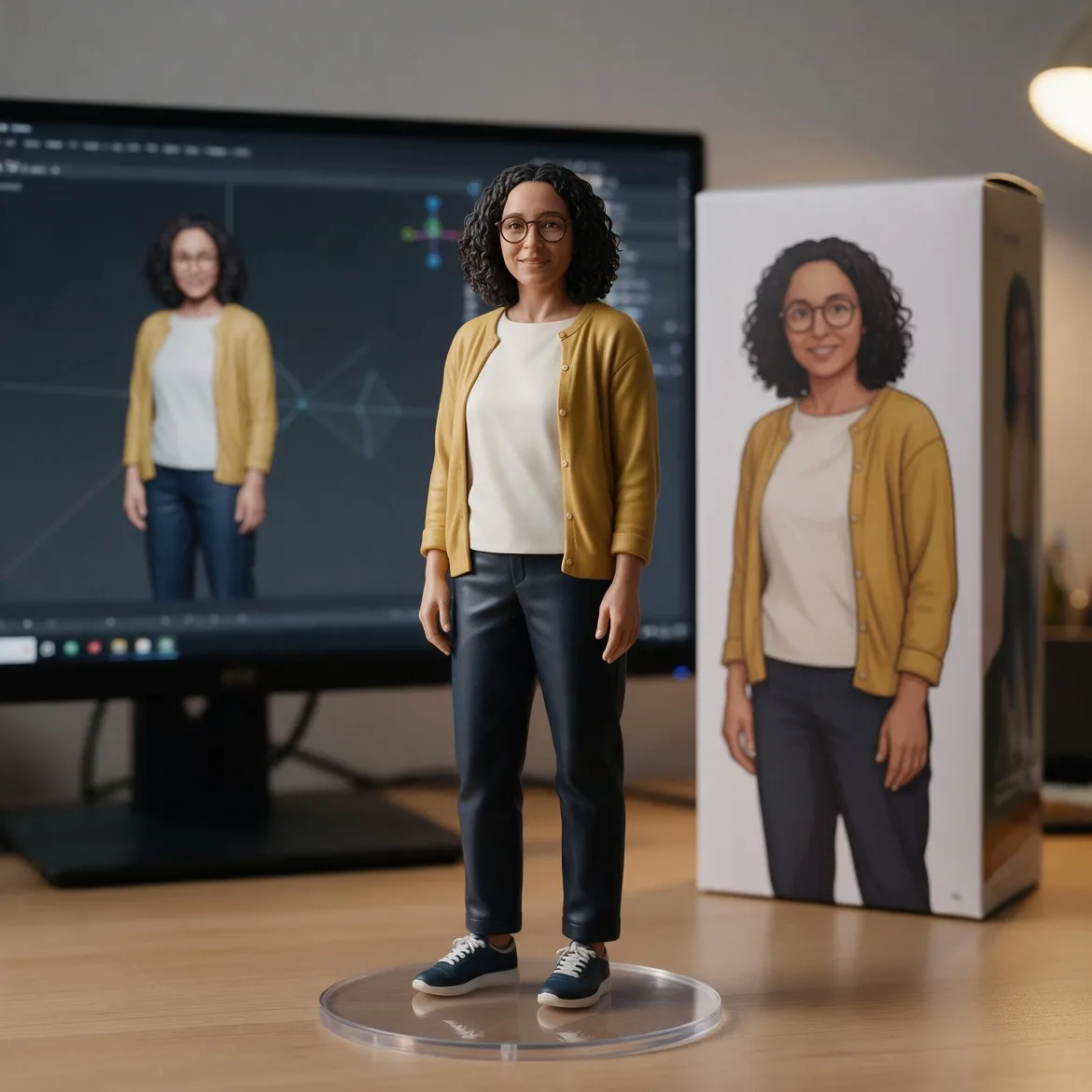
Minha Colecionável Mini Eu
CriarUma pesquisa por “eclipse lunar” no final de agosto geralmente não é uma busca por um almanaque. É uma busca por uma noite que se sente diferente: a lua não é mais uma moeda branca rígida, mas uma lâmpada atenuada e pálida como cobre, e uma pessoa em pé sob ela como se o ar tivesse mudado de temperatura. Esse desejo é visual. O erro é tratar o céu como um documentário que você pode falsificar, ou como uma foto do NASA que você pode reimprimir.
As fotos que se mantêm são mais pequenas. Um rosto original. Um campo ou um terraço. Luz da lua que é mais fria e fraca do que a luz de uma lâmpada de rua, com uma pitada de cobre onde a sombra se encontra. O Idoli é construído para essa foto estática, depois para um curto clipe que mantém a mesma pessoa enquanto a luz mal se move.
O cinema de eclipse funciona por causa de uma única fonte de luz. A lua é grande no quadro ou pequena e alta — qualquer uma das opções está bem — mas ela deve se comportar como luz, não como um diagrama com rótulos. A pele absorve uma mistura pálida, ligeiramente quente e fria. As sombras caem suavemente. O chão permanece escuro. Você não precisa de uma sobreposição de telescópio, de um carimbo de data ou de um filtro vermelho de “lua de sangue” que só existe para se tornar viral.
Um quadro publicável nesse clima parece um retrato noturno que acidentalmente coincidiu com um disco atenuado. A pessoa ainda é específica. O céu é um fenômeno climático. Se você removesse a data da tendência, a foto ainda seria uma matéria editorial iluminada pela lua.
Retrato noturno cinematográfico de uma jovem original em um campo aberto, lua grande e atenuada com uma borda de cobre, luz fria da lua na pele, textura natural, sem diagramas, sem logotipos, sem semelhança com celebridades
As imagens estáticas falham primeiro na identidade. O segundo quadro apresenta uma mandíbula diferente sob a mesma lua. O bloqueio de personagem vem antes do espetáculo. O Idoli usa personagens reutilizáveis e referências de 3 ângulos para que o rosto sob o disco seja o mesmo rosto no clipe.
A conversão de imagem para vídeo tem então uma função: deixar o cabelo e a roupa se moverem como se o ar noturno fosse real, e deixar a lua parada. Não é um fluxo de trabalho para um filme falso de observatório. Alguns segundos de respiração e um olhar mantido já são cinema. Um longo “time-lapse de eclipse” que inventa um céu que a câmera nunca capturou geralmente se transforma em algo desorganizado e em uma pessoa que não corresponde mais.
O céu não é de propriedade de ninguém. Um logotipo de estúdio na lua é. O rosto de um astrônomo vivo não é uma musa. Gerar uma semelhança com um apresentador famoso, colar uma marca de agência ou publicar um clipe como se fosse material oficial de uma transmissão de telescópio não é homenagem. É um clone com uma cor melhor.
Mantenha o eclipse como um fenômeno climático. Mantenha a pessoa original. Não invente um documentário de um céu que você não filmou. Se a imagem só funciona porque alguém pode confundi-la com uma foto de notícia, não é uma foto que você deve publicar.
A luz da lua como lâmpada é útil quando é sincera. Fichas de personagem para uma história noturna. Retratos editoriais que usam uma fonte fraca. Curtos clipes de portfólio que precisam de quietude em vez de neón. Quadros de atmosfera para um roteiro que se passa na escuridão aberta.
Nenhuma dessas tarefas requer uma transmissão falsa. Elas requerem uma musa que você pode reativar, sob um disco que você projetou como luz.
A Idoli bloqueia o personagem primeiro, depois deixa a noite se mover. Referências de 3 ângulos evitam que o rosto se desvie quando você passa de uma imagem fixa para um clipe. Modelos podem iniciar uma receita de iluminação. Criar é o local onde a pessoa permanece sua.
Esse fluxo de trabalho é o oposto de uma fábrica de céu falso. Você não está tentando ganhar uma discussão sobre se o eclipse é real. Você está tentando criar uma noite que pertence ao personagem que você realmente construiu.
A busca quer um eclipse lunar. O que você pode manter é a lâmpada: uma lua atenuada, pele fresca, uma pessoa que ainda se parece com ela mesma. Deixe de lado a sobreposição documental. Então o clipe é um retrato cinematográfico, não um boato sobre o céu.